Teaching
I am deeply passionate about teaching, especially on human sexuality, intersectionality, and statistics & data analytic methods. Below you'll find my teaching philosophy that discusses my pedagogical approach and principles, presentation slides from a teaching demo I gave on Sexual Pleasure, and a sample syllabus for an Introduction to Human Sexuality course.
Teaching philosophy
I believe that teachers come into the classroom with identities and experiences that shape their pedagogy, that rigor lives in clarity rather than intimidation, and that the classroom is a continuous part of students’ lives. These beliefs shape how the Psychology course that I hope to teach: one that is honest about the field’s historical blind spots, accessible enough that students do not have to choose between an A and self-respect, and connected to the world around us such that what students learn continues to matter after the semester ends. My job, as I understand it, is to teach Psychology accurately, to make it usable in students’ actual lives, to honor the diversity of human experiences that the field has too often flattened, and to send students out as people who can continue learning on their own. The five principles below describe how I pursue these goals and how I work to make my future classroom one in which historically minoritized students can show up fully.
01
Approach teaching as a fellow student.
I am currently and have always been a student myself, and those experiences are inseparable from and informative for my identity as a future instructor. I believe the distinction between instructor and student is blurry: while I may be the instructor of record, the learning goes both ways. In practice, this means extending toward my students the empathy and compassion that I benefited from or hoped to receive. I design my courses around the assignments and activities that taught me something as a student, and leave behind the busywork that did not. Because the risk of providing critical or corrective feedback to an instructor falls disproportionately on historically minoritized students due to the inherent power asymmetry, I hope to intentionally invite students’ perspective through completion-based pre-/post-course surveys and an anonymous inbox, while openly modeling comfort with being wrong and appreciation for being corrected.
02
Knowledge is power, especially when made accessible.
I believe that complicated things often do not need to be as perplexing as they are made to seem, and I work to find the right analogy or scaffold. When I taught Ridge/Lasso regularization in regression, I used an analogy of fishing nets: small holes catch everything, including junk; large holes are selective in catching big fish, but may lose other fish; an elastic net regularization adjusts the hole size to fit the lake and the fish we want. With my lab’s research assistants, my labmate and I scaffolded their semester-long research projects by breaking the process down into steps, from reading literature and generating a research question to conducting hands-on analyses in R and writing an abstract of the results, sentence-by-sentence. I believe that making learning accessible for students is critical for knowledge equity: students who are convinced that they are not meant for higher education have often been gatekept out of that identity, and by making knowledge accessible at their pace, I can equip students with the tools to push back the stigma that have historically harmed them.
03
The classroom is a continuous extension of the external world, not isolated from it.
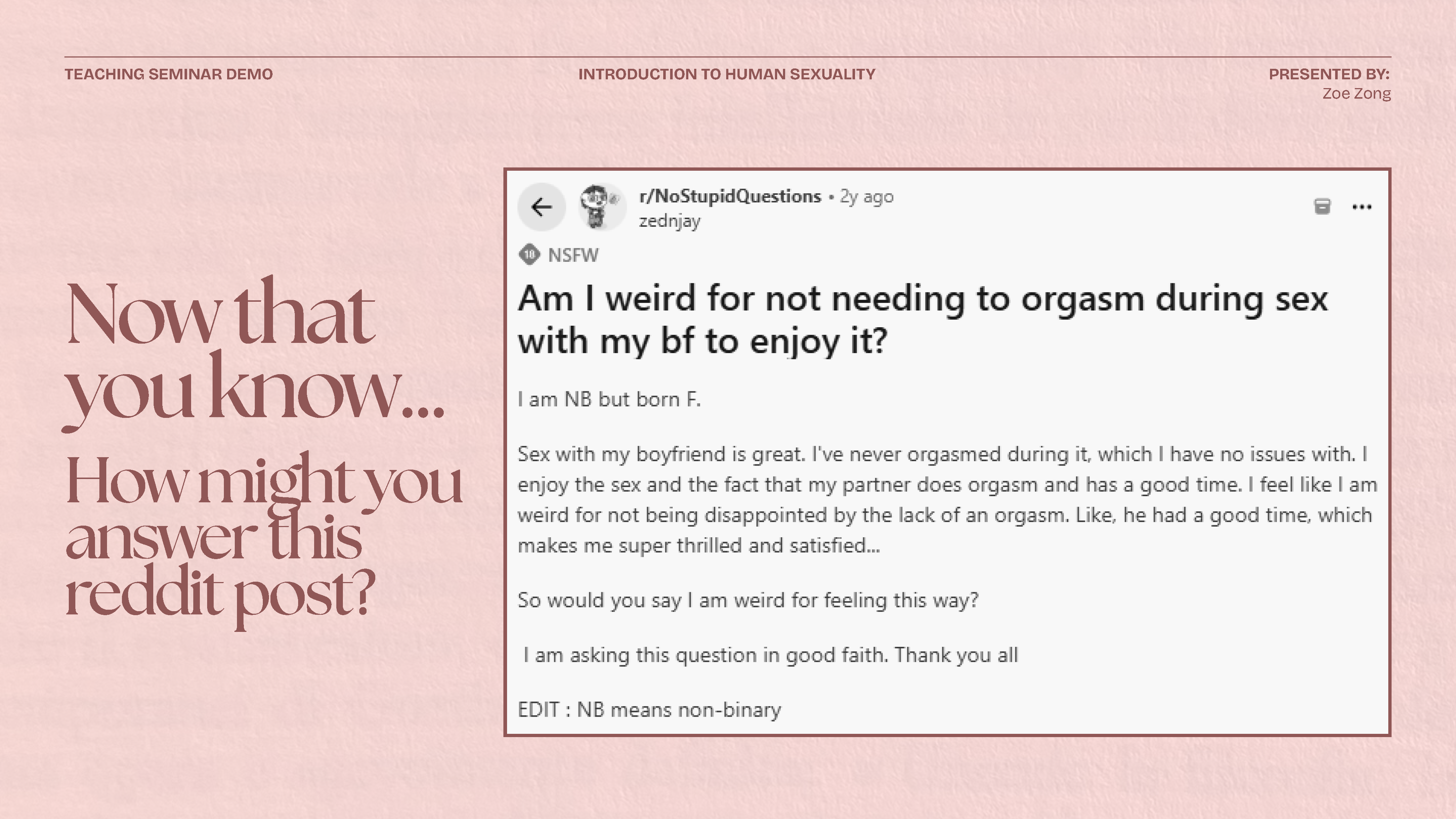
I believe that this principle is particularly relevant in the context of sexuality education. I hope to design my courses with the external world in mind, through current events, popular culture, and questions that students actually wrestle with, so that learning flows into their lives. In Introduction to Human Sexuality, I plan to open every module with an “answer the Reddit post” activity in which students discuss how to respond to a real online post that is relevant to the module’s topic in an evidence-based manner. This same emphasis on real world application applies to the final project: students pick a popular claim about sexuality from their own lives (a TikTok, a quote from a friend, etc.), investigate it across multiple perspectives, present their findings through a short video for the class Padlet, and provide feedback to their peers’ videos. The project is scaffolded across the semester through multiple stages, and aims to build sustained practice doing what I hope they will keep doing after my course ends.
04
Bring my whole self into the classroom and invite my students to do the same.
I am not a blank slate, and pretending to be one would make me a worse teacher. As a queer cisgender Chinese woman, my lived experiences in relation to course topics shape how I teach them, and I bring my whole self into the classroom (within appropriate professional limits) so that historically minoritized students see room for themselves. On the first class for each of my five semesters teaching Introduction to Counseling and Mental Health, every person in the room (including myself) anonymously writes a personal reason that draws them to mental health on an index card; the cards are shuffled, read aloud, and become an entry point for a discussion on stigma against the pervasive yet invisible nature of mental health difficulties. Across over 120 students, none ever opted out even though the option was available. Intentional invitation for feedback, anonymous activities, and assignments that take students’ full lives (non-traditional students, working students, students with disabilities, caregivers) into account reflect how I embed inclusivity in my classroom.
05
Prioritize and foster curiosity and joy.
I believe in the curiosity of human nature, and I hope to cultivate it through my teaching. I hope to design my assignments as reflective of everyday life and normalize curiosity in lecture with framing like, “This is a topic people often wonder about and don’t get to ask.” I pair this with an anonymous inbox where students can submit questions, suggestions, or feedback without identifying themselves, due to the varying degrees of comfort and stigma surrounding sexuality. This inbox is one way that I try to ensure that curiosity is not gated by who feels safe asking out loud. In addition, I aim to go beyond the negative framing of sexuality as primarily a site of risk, dysfunction, or shame, and teach positive dimensions of sexuality (pleasure and joy) as legitimate academic content, particularly for historically minoritized people.
My approach to assessment follows these principles, as I hope to use multiple modalities so students can demonstrate learning in different ways. Low-stakes recurring quizzes with multiple attempts and automatic drops help students build foundational knowledge; applied short essay questions on non-cumulative exams ask students to demonstrate transfer of knowledge; and a final project presentation that requires students to use evidence-based reasoning and present on a popular claim about sexuality. I also plan to administer pre- and post-course surveys to track shifts in comfort and confidence alongside knowledge change. I came to teaching as a student, and I plan to remain one. I hope that my students will leave my classroom and talk to their partners, friends, families, or future clients/patients, which may shift the norms in hard-to-reach communities. The courses that I feel qualified to teach are: Introduction to Human Sexuality, Abnormal Psychology, Multicultural Issues in Psychology, Cross-Cultural Psychology, Psychology of Women, Psychology of Interpersonal Behavior, and Introduction to Research Design and Analysis.
Sample Lecture:
Sexual Pleasure
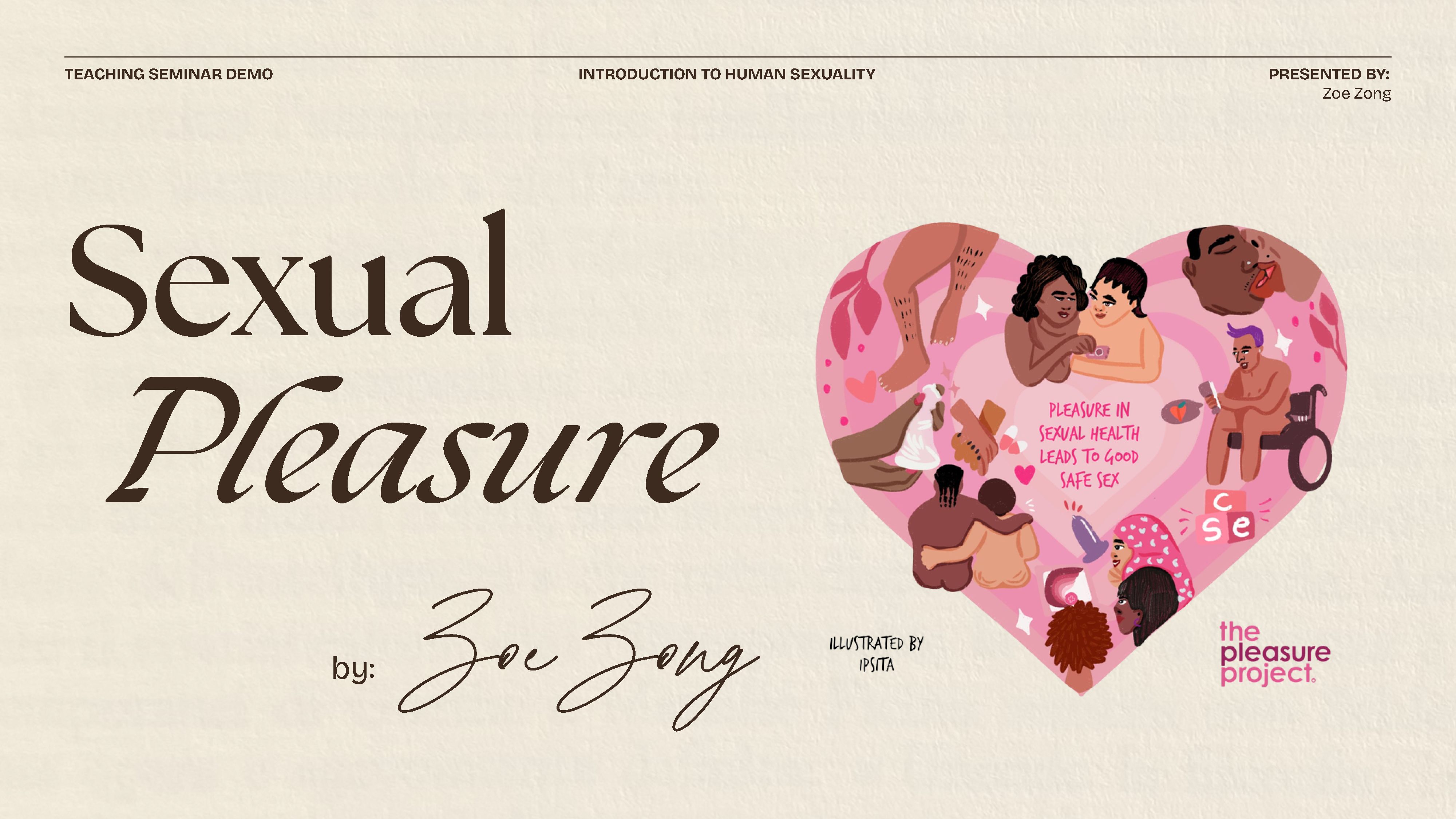
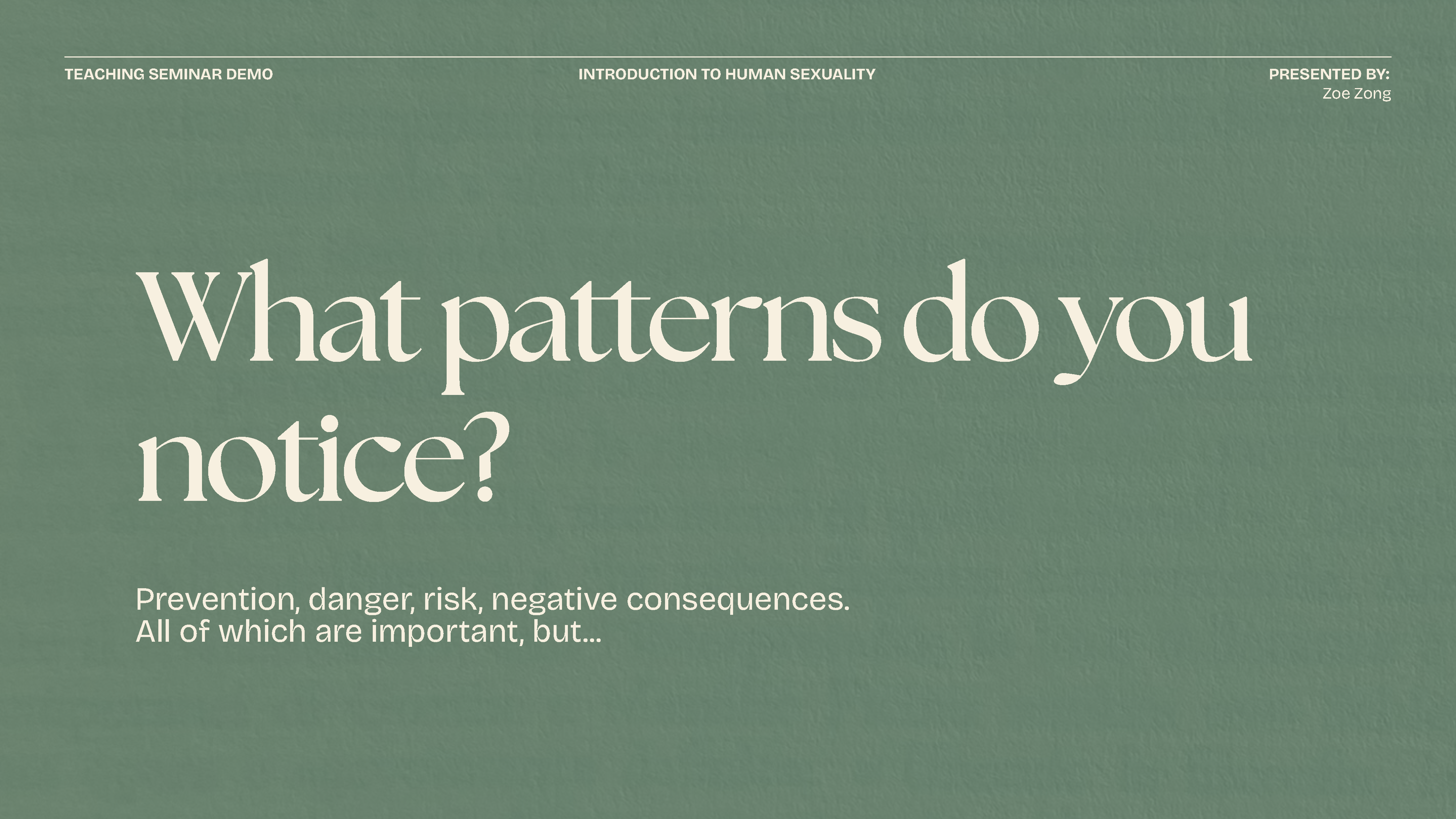
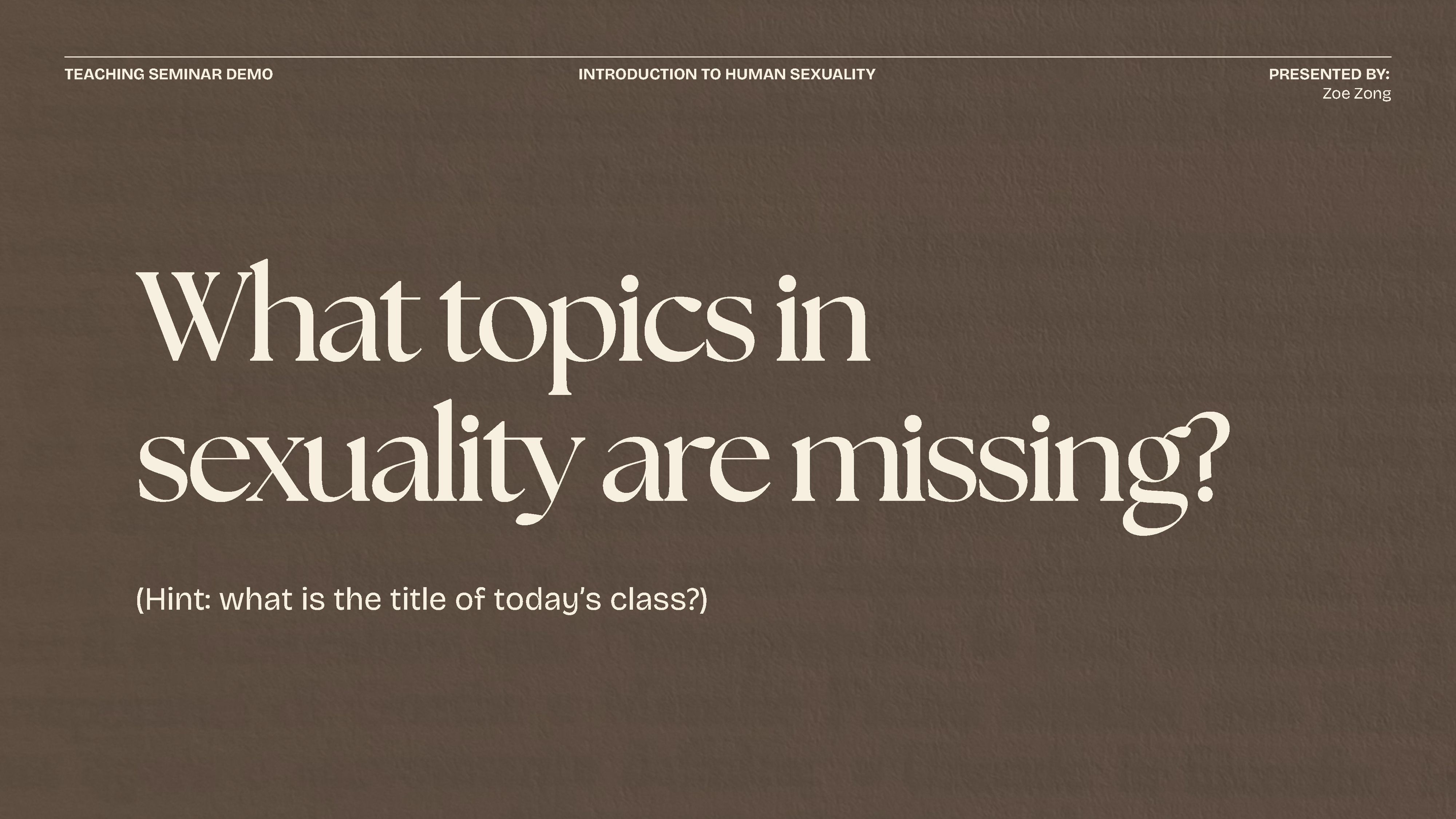
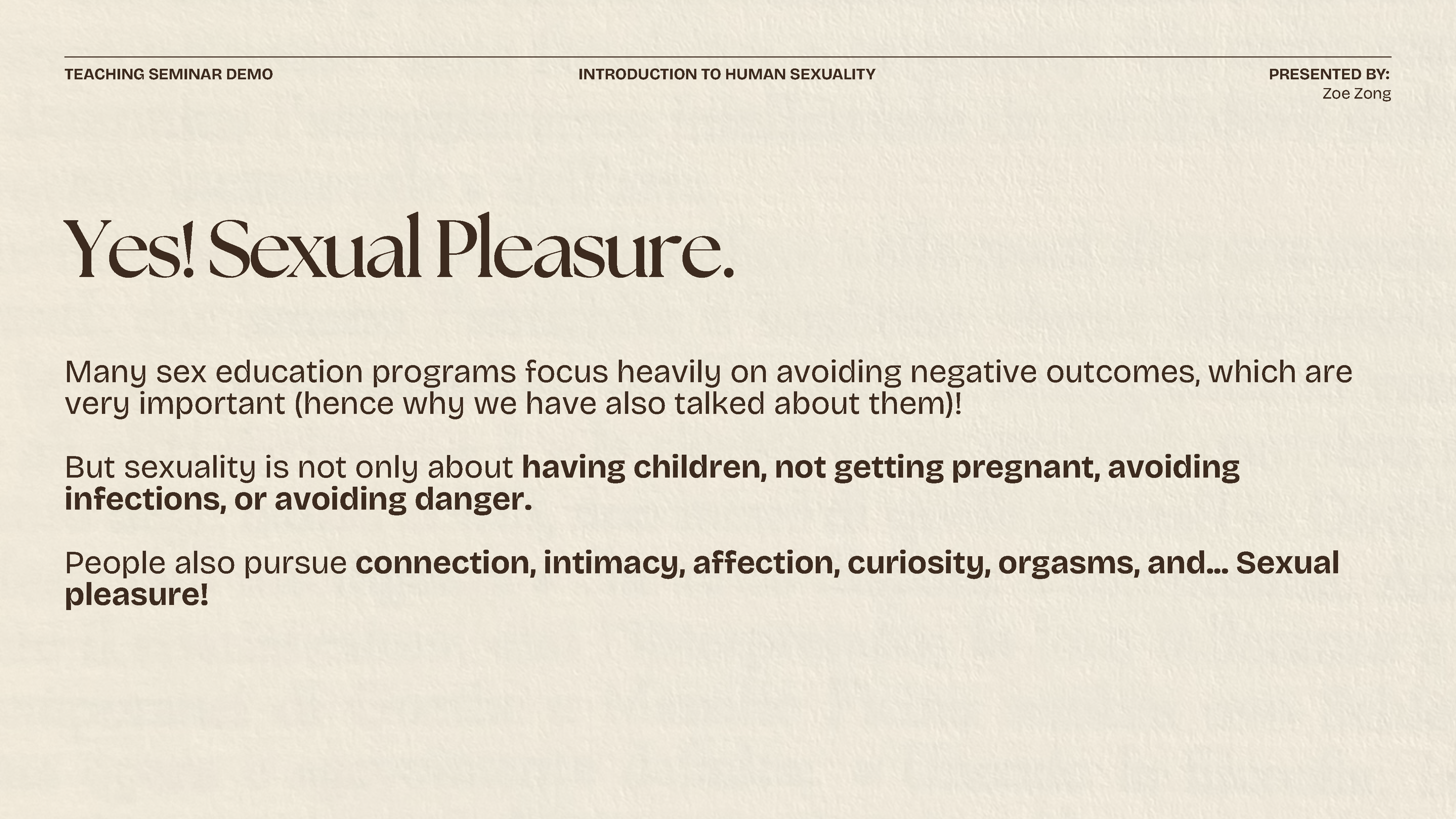
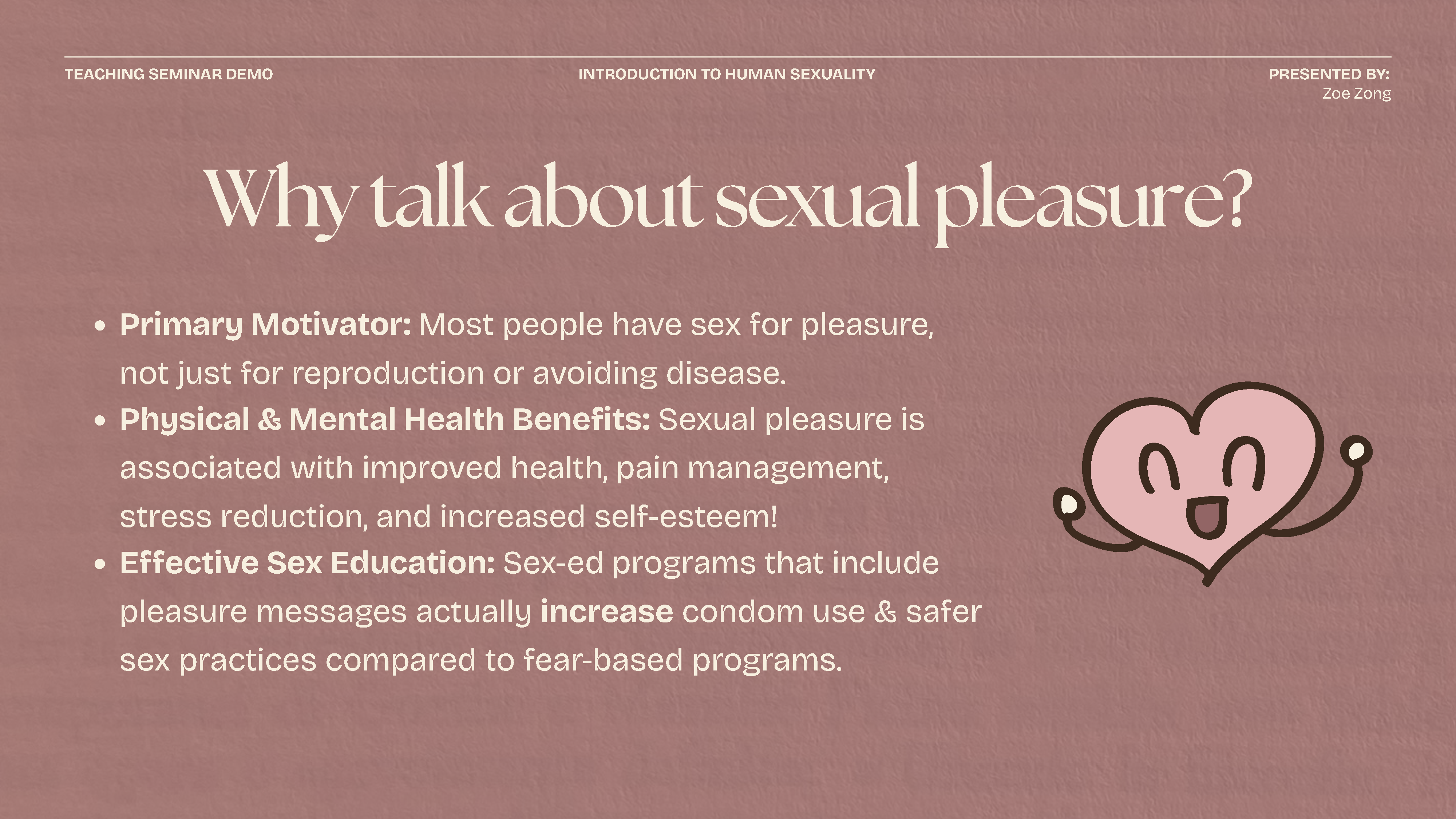
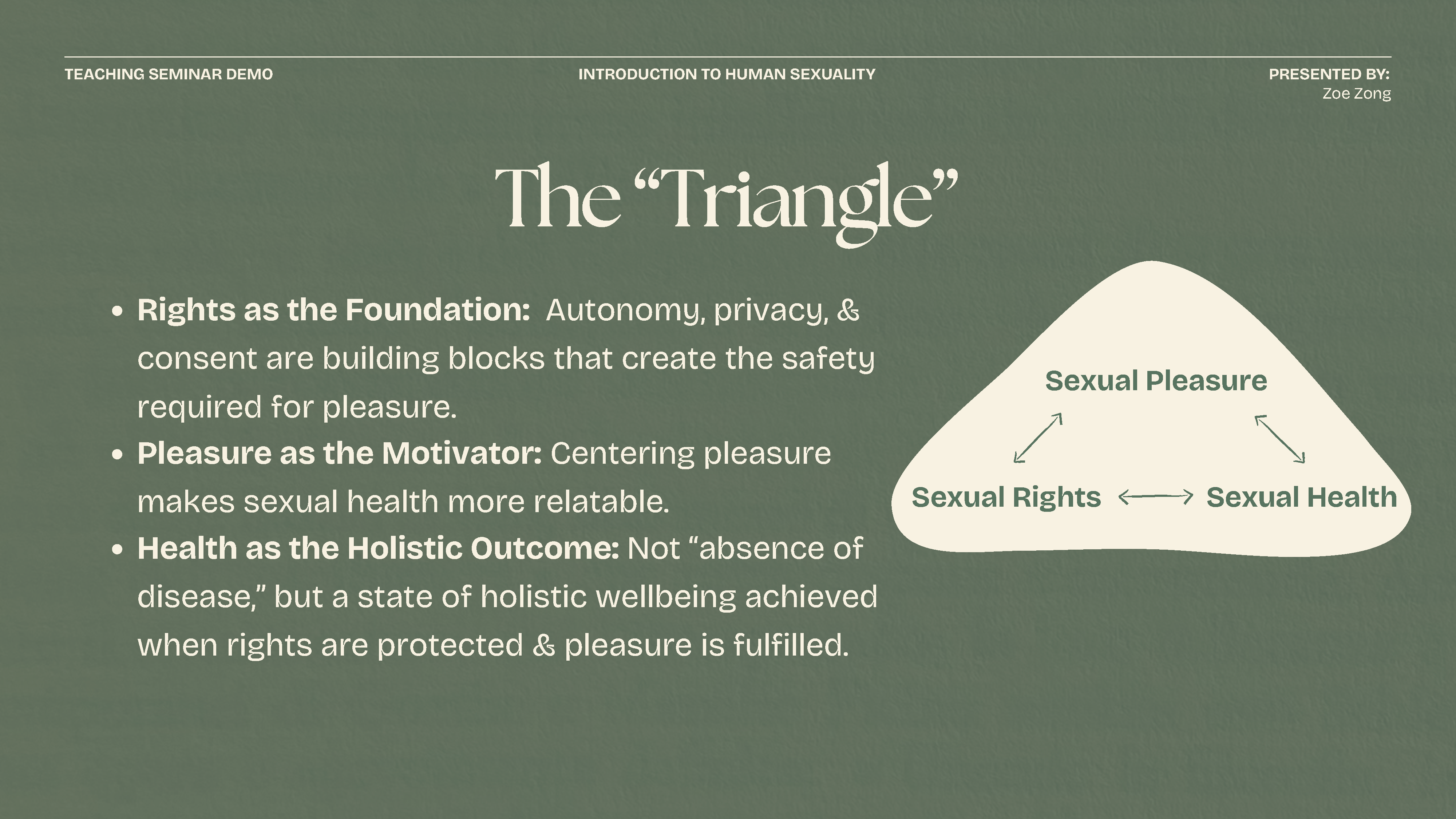
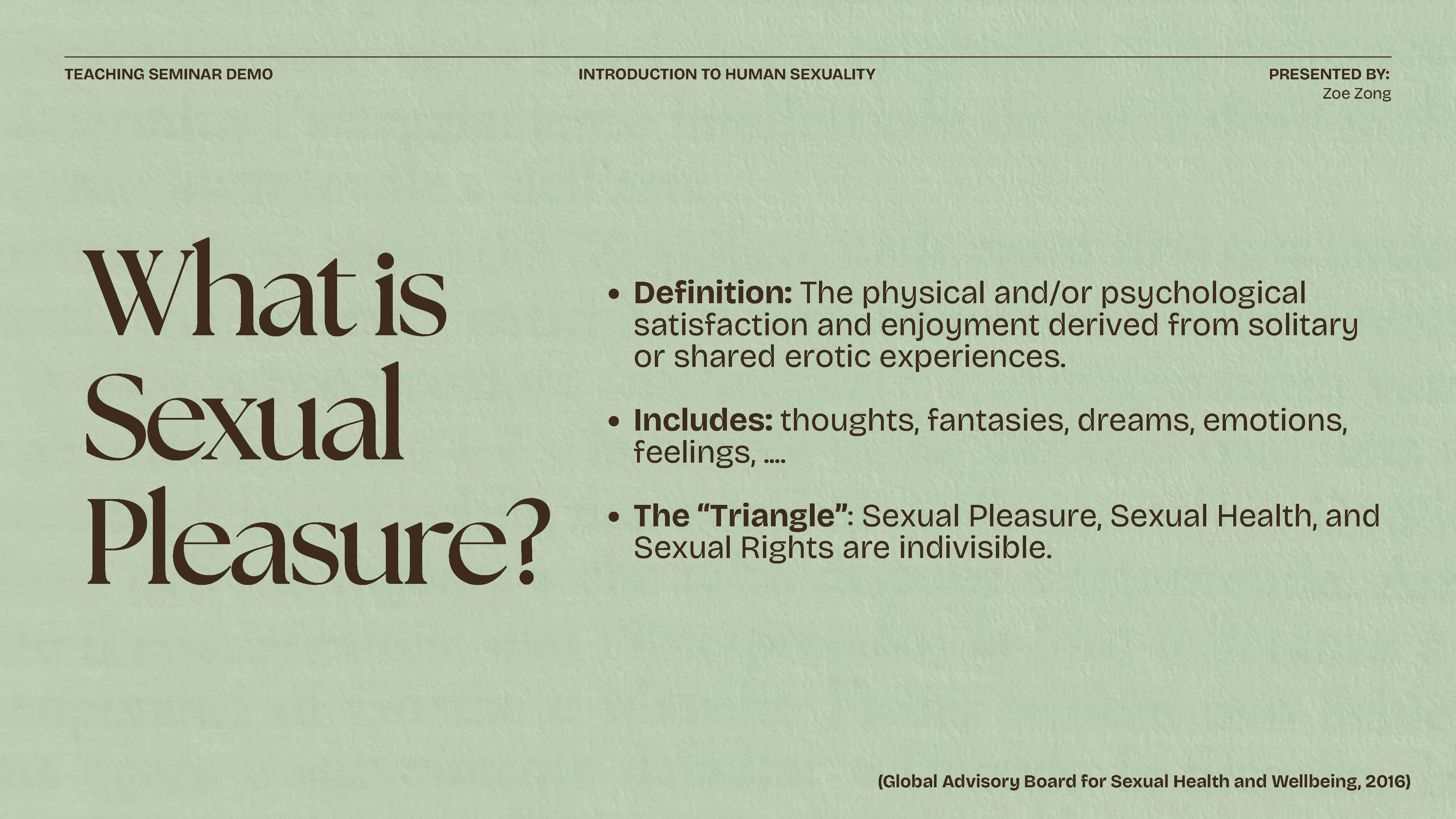
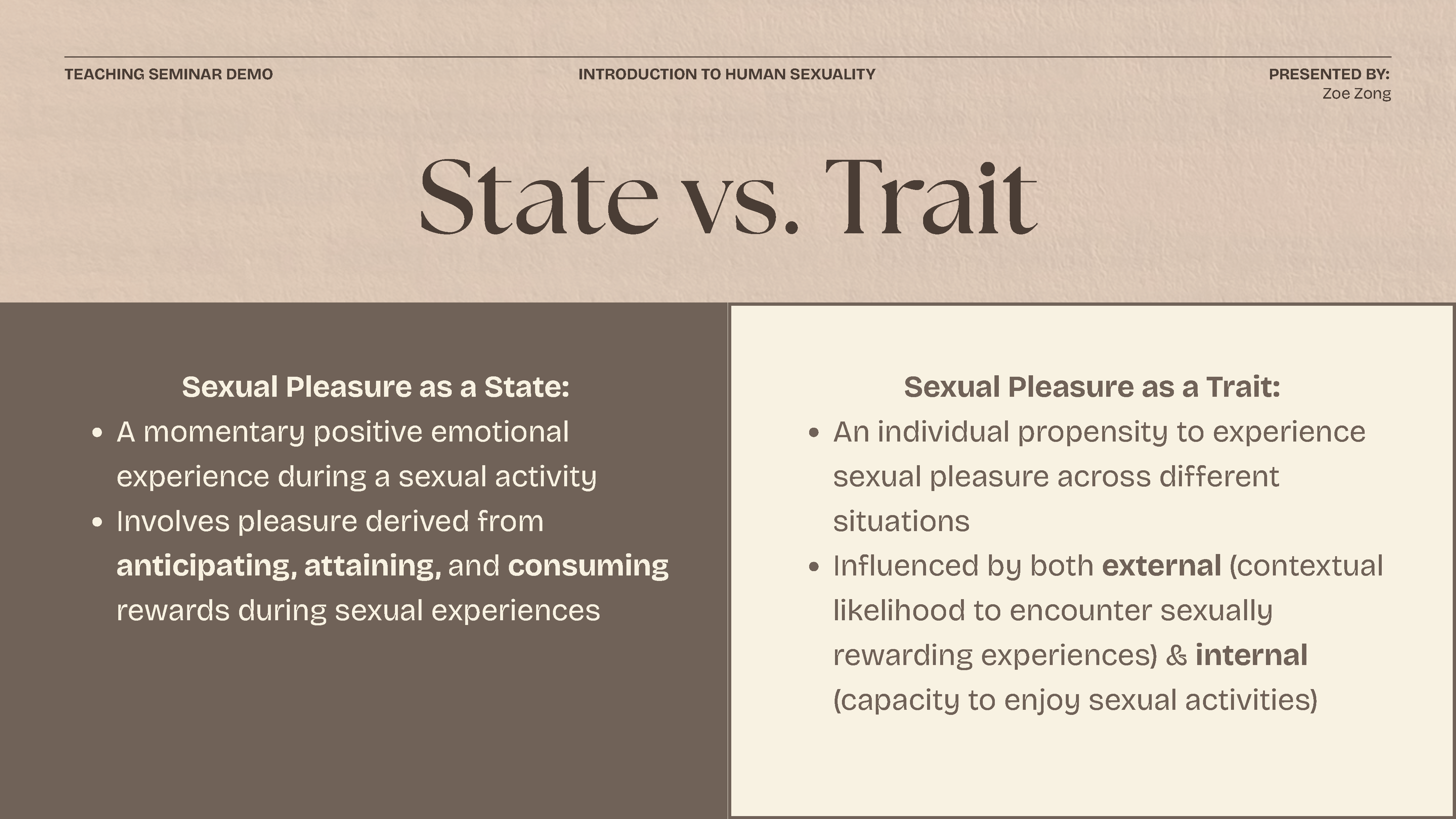
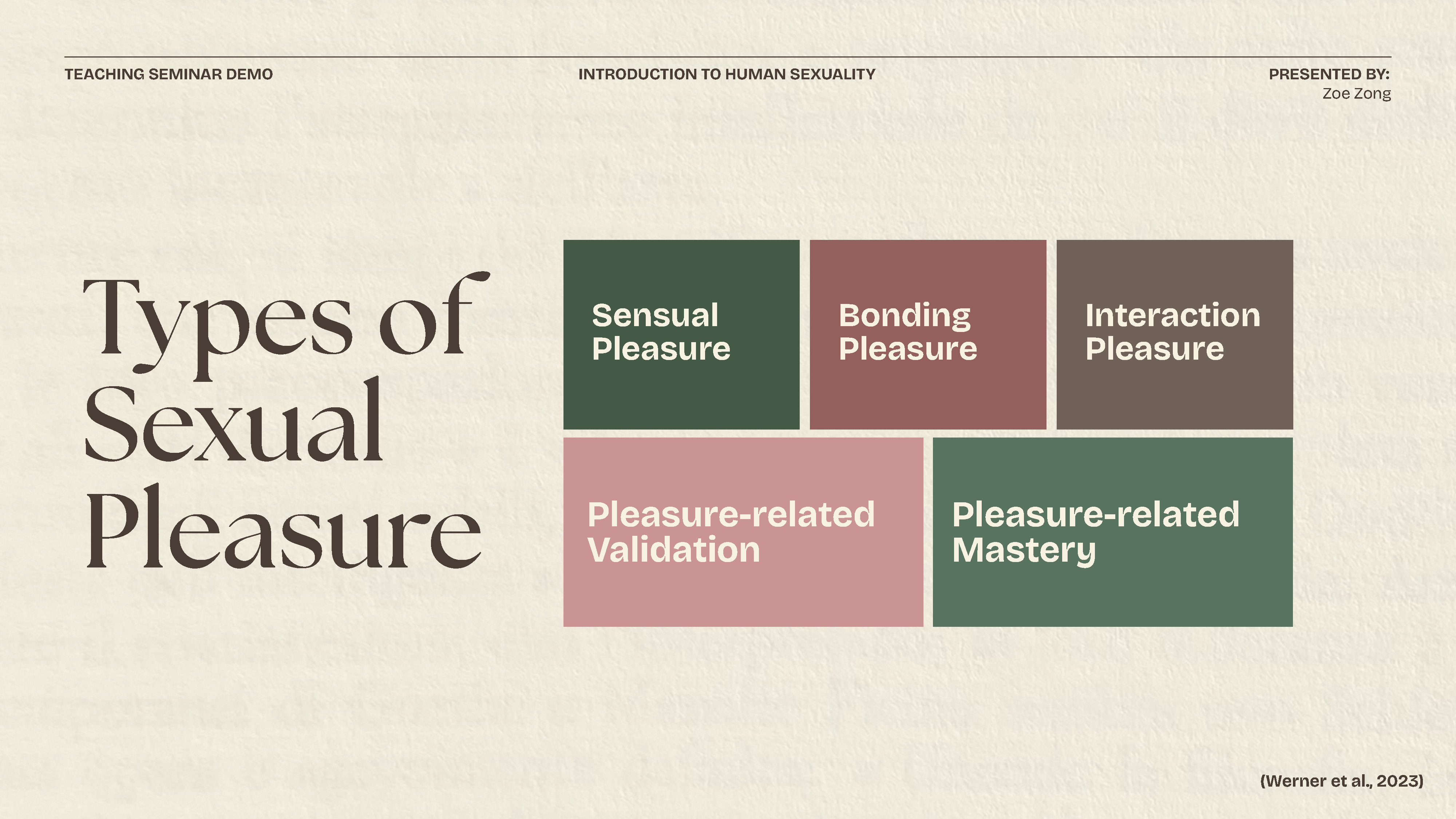
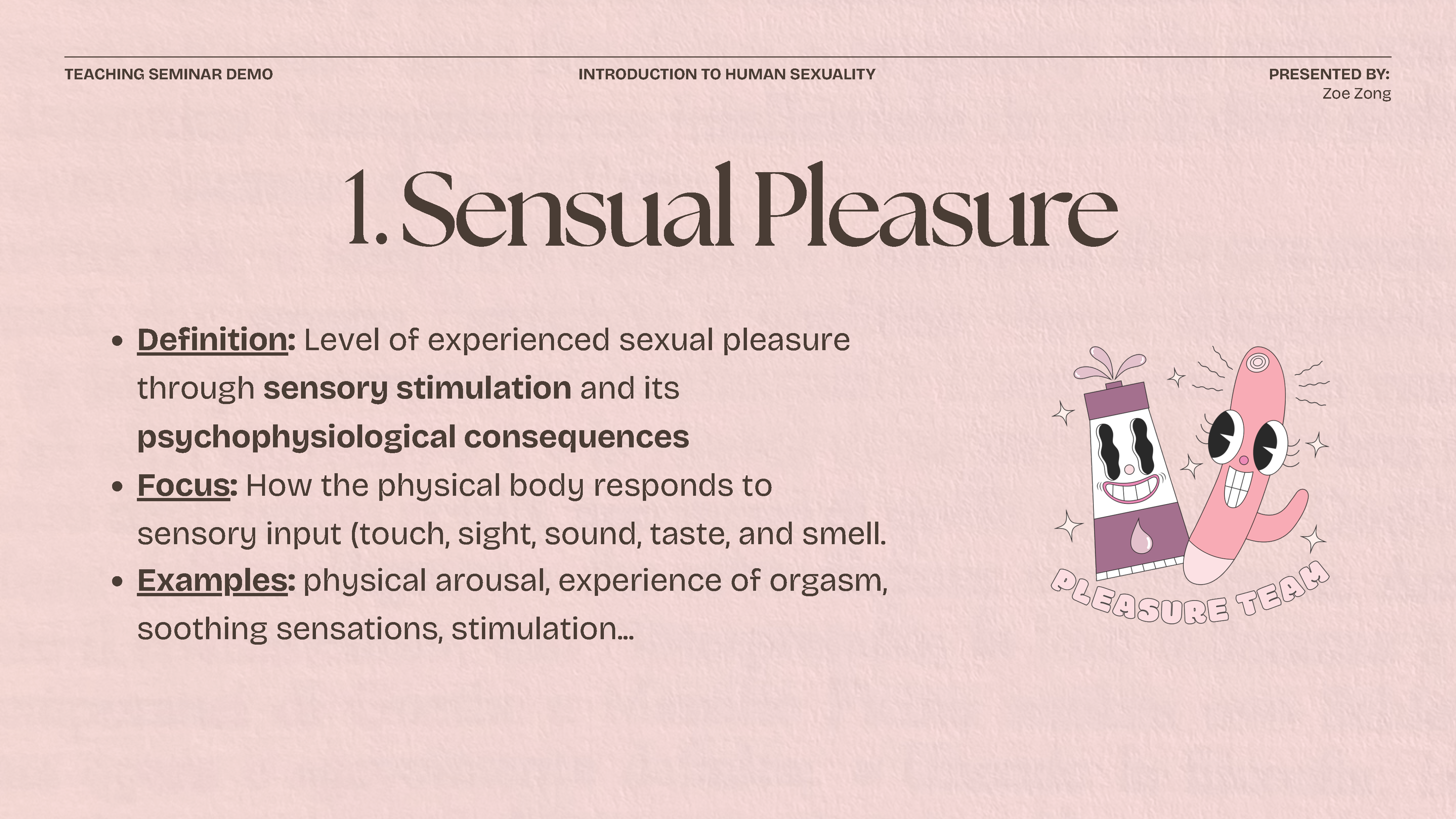
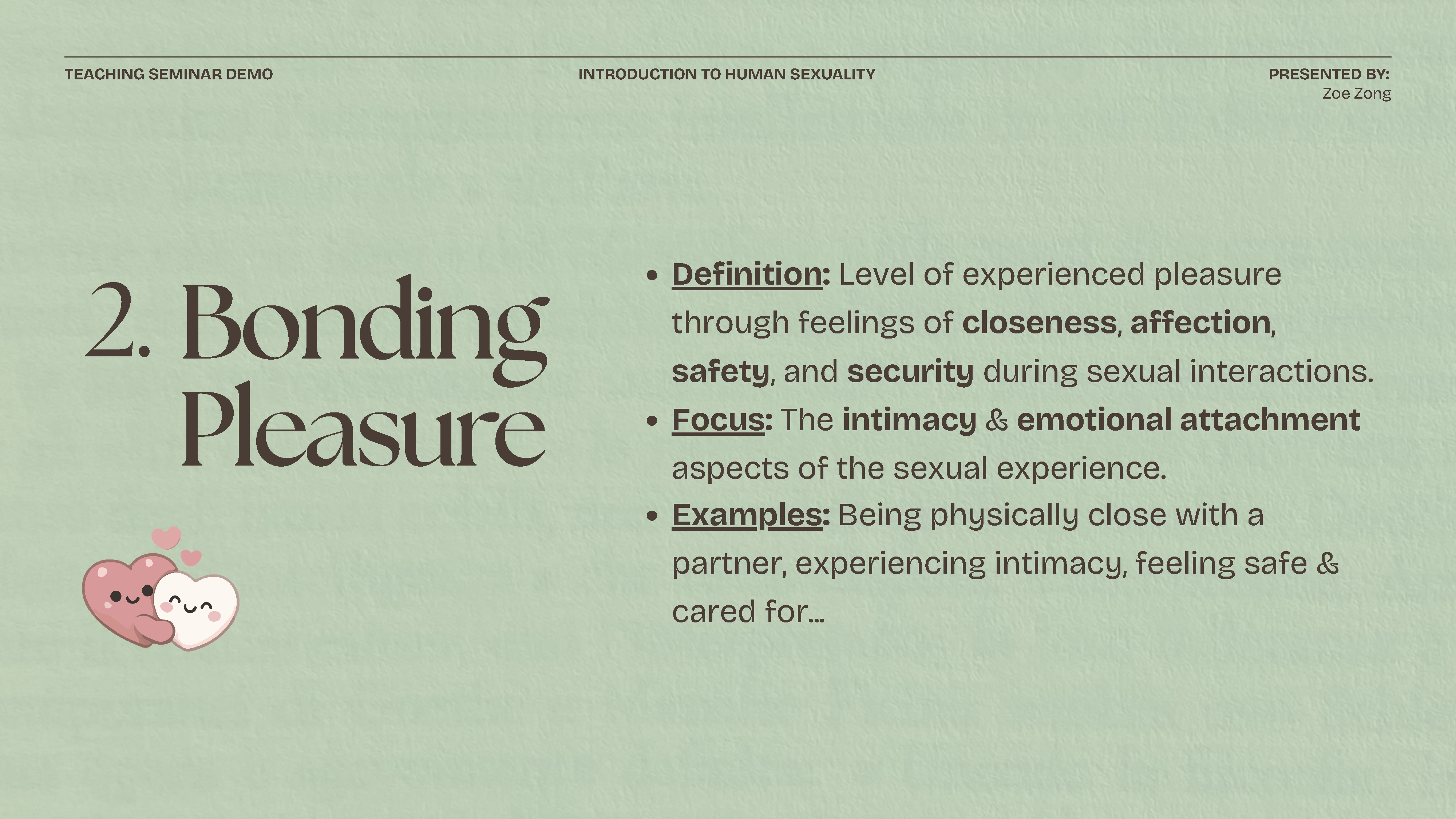
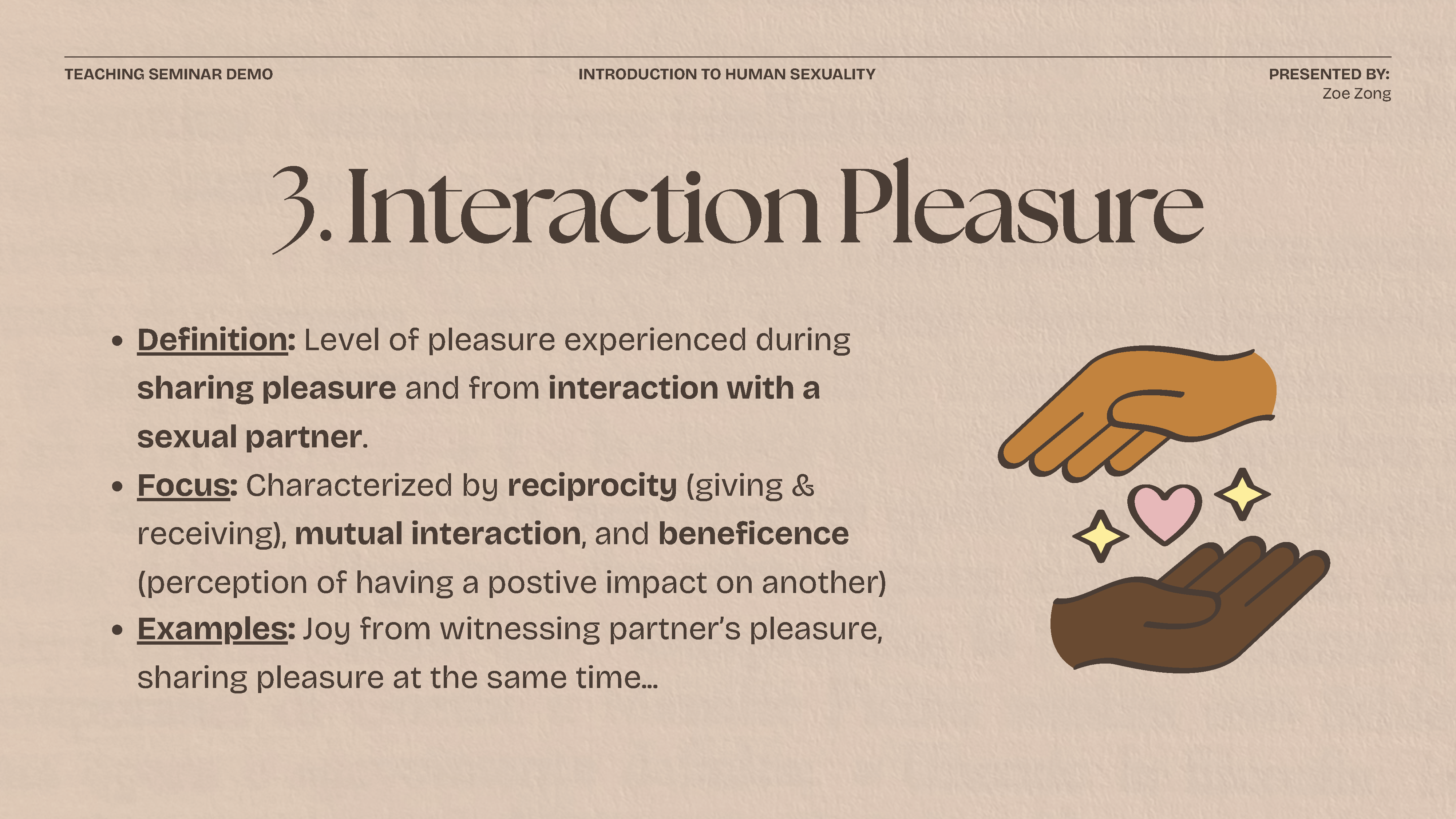
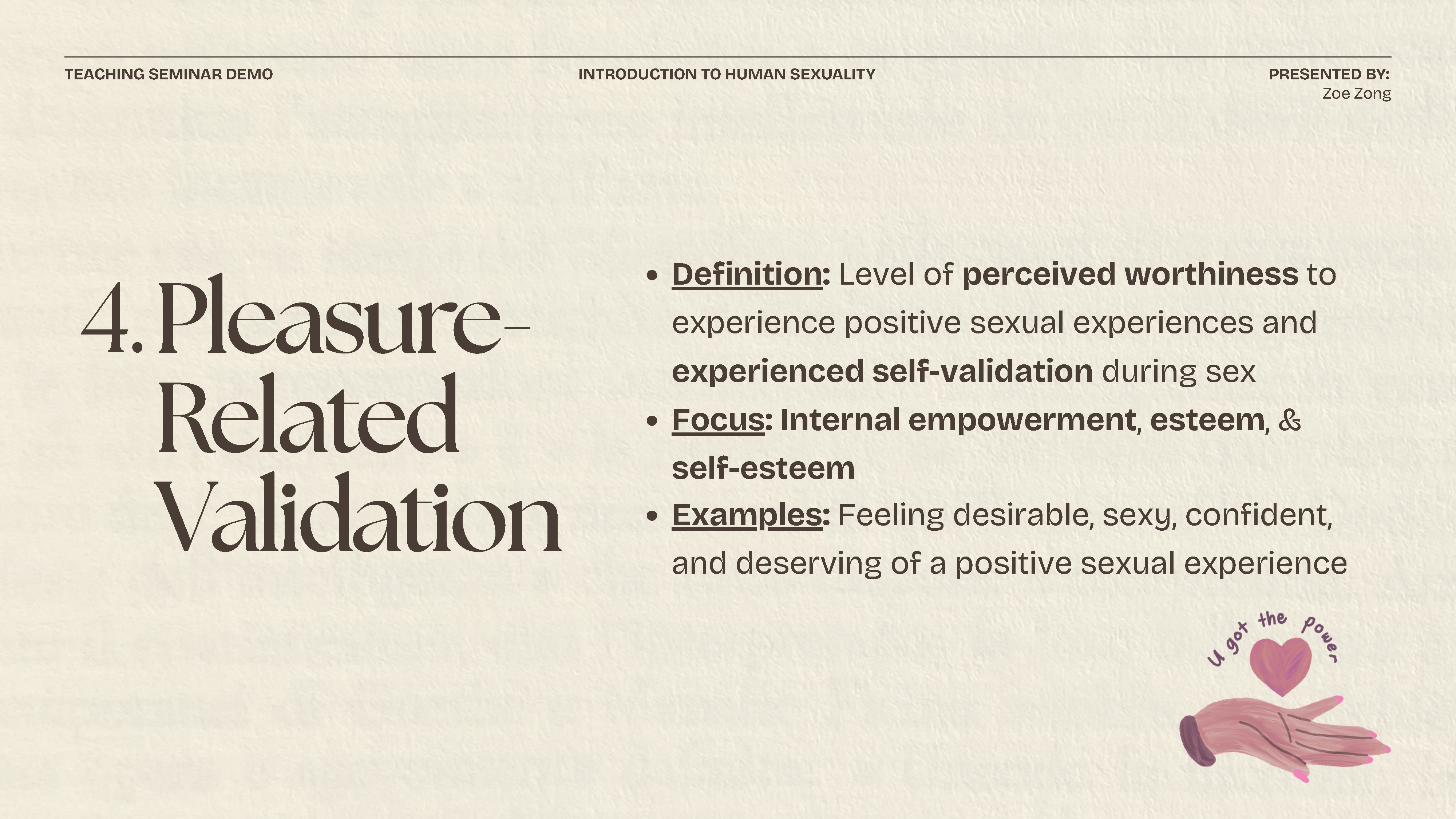
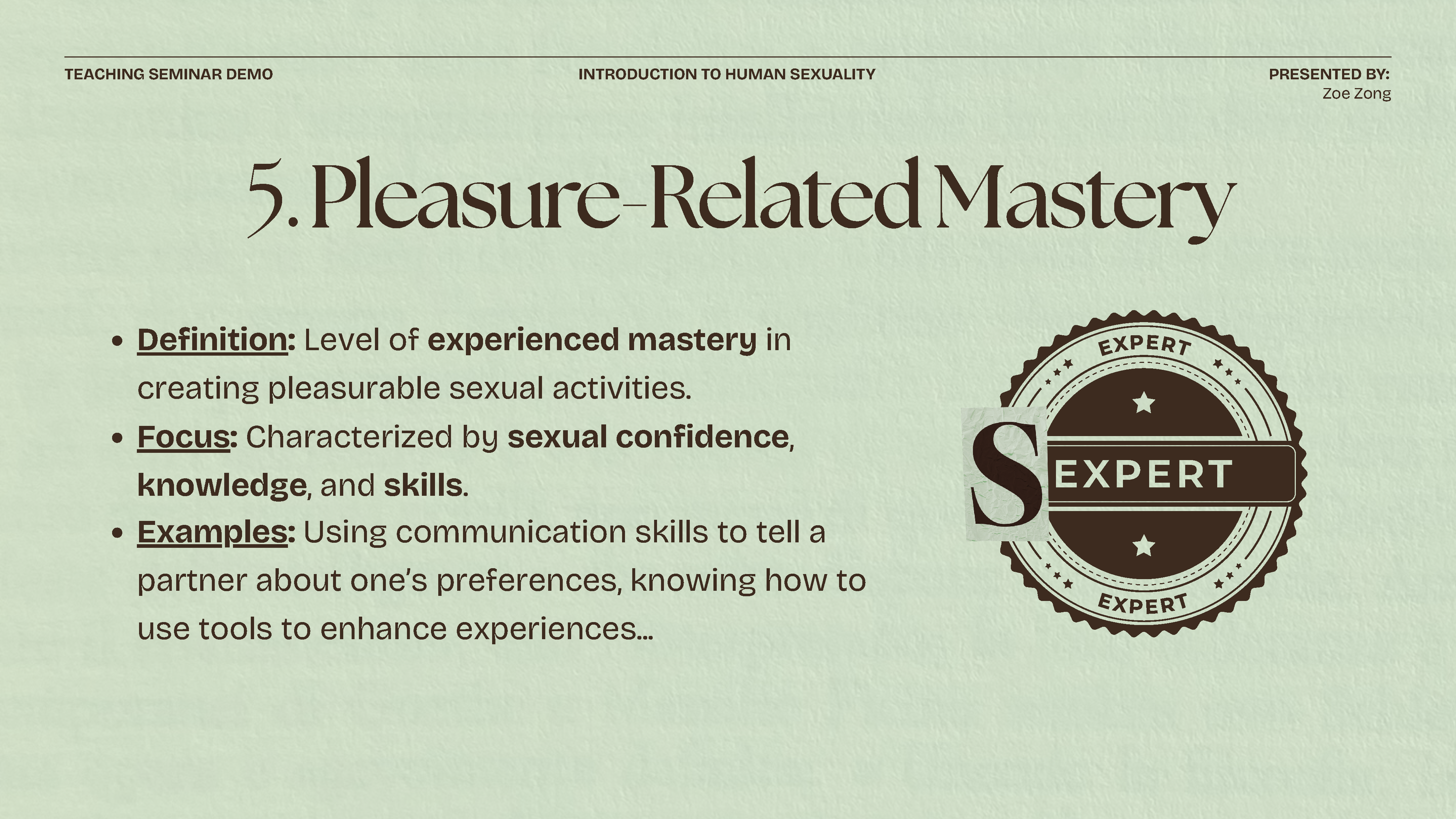
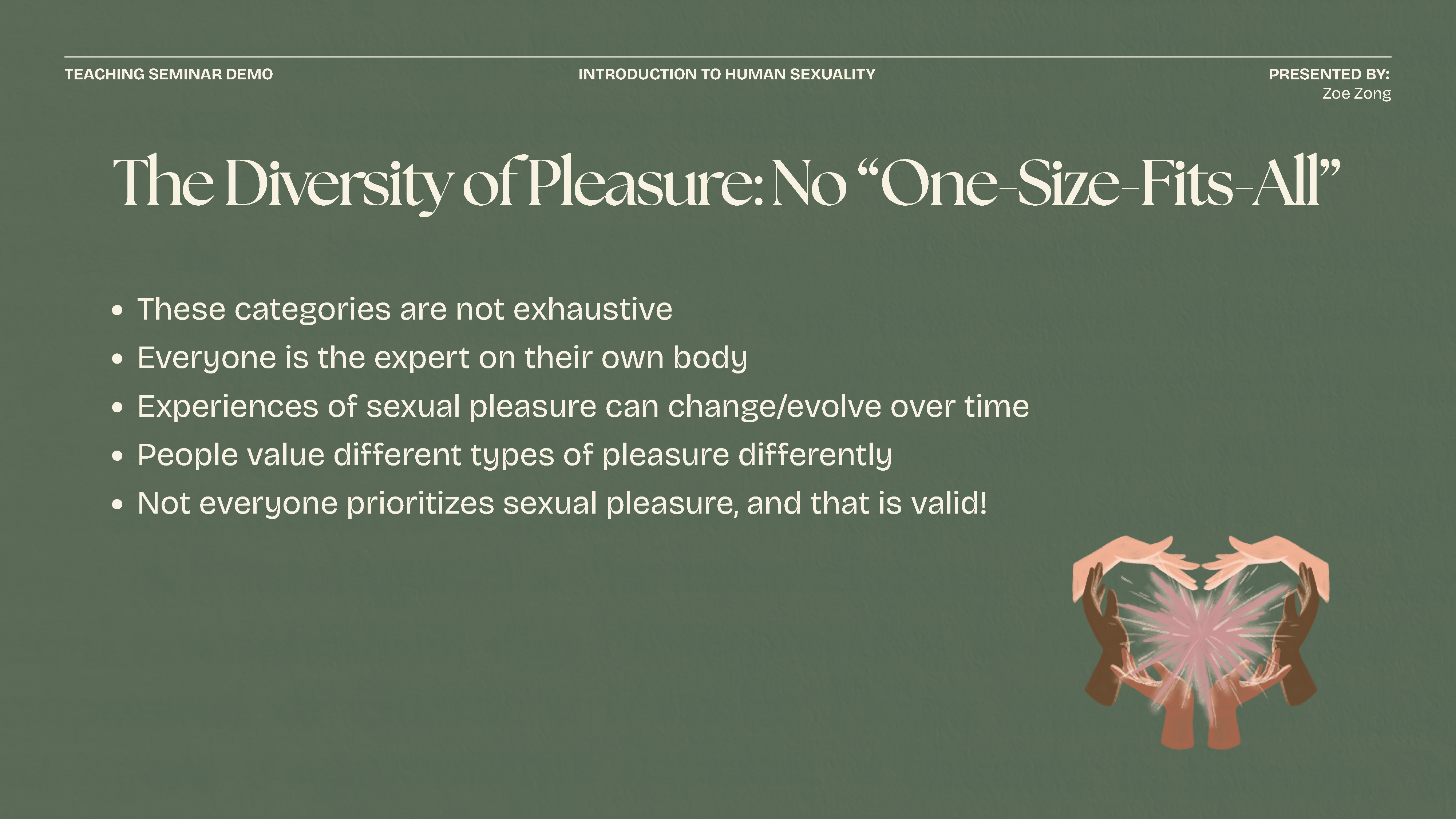
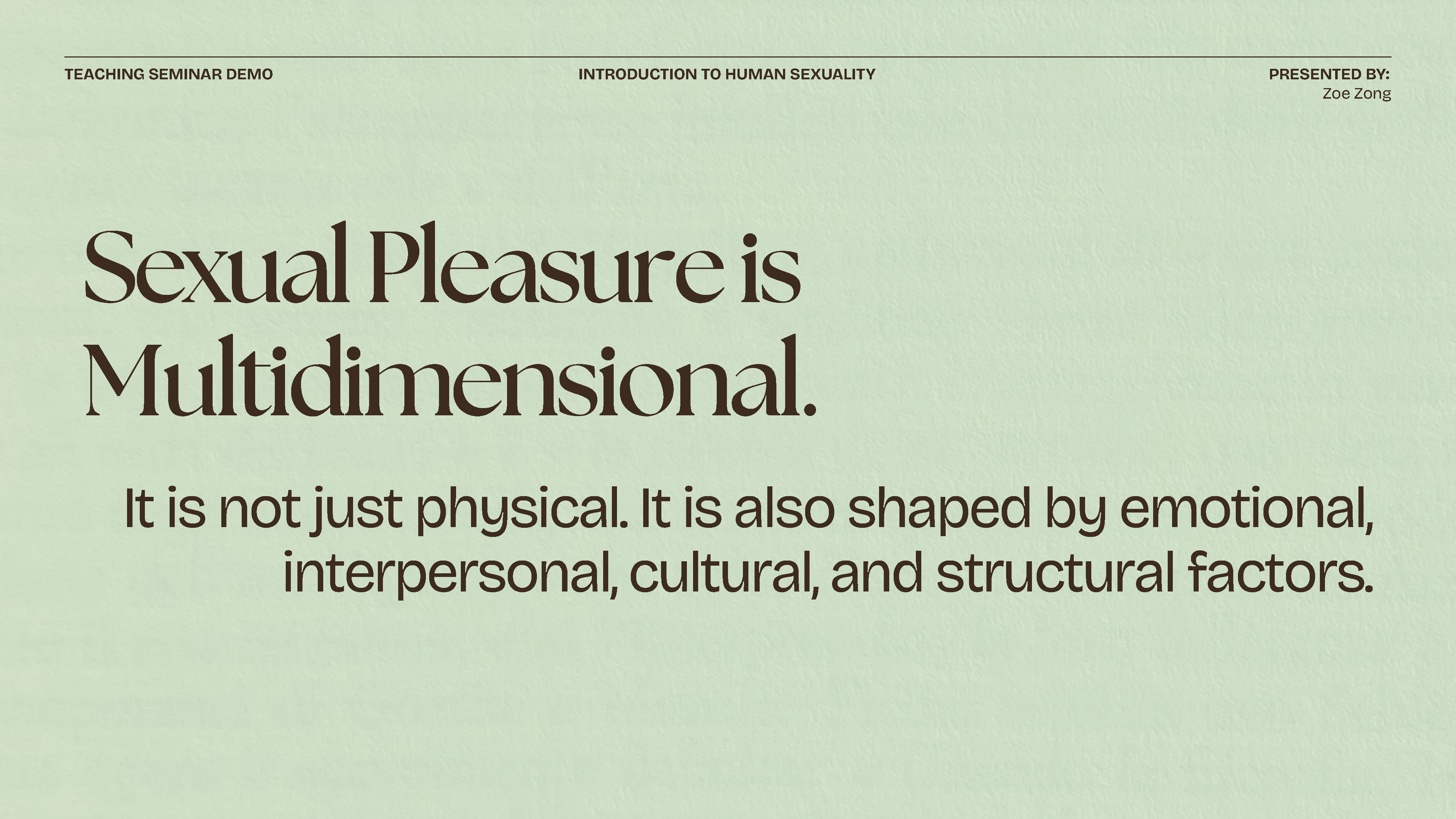
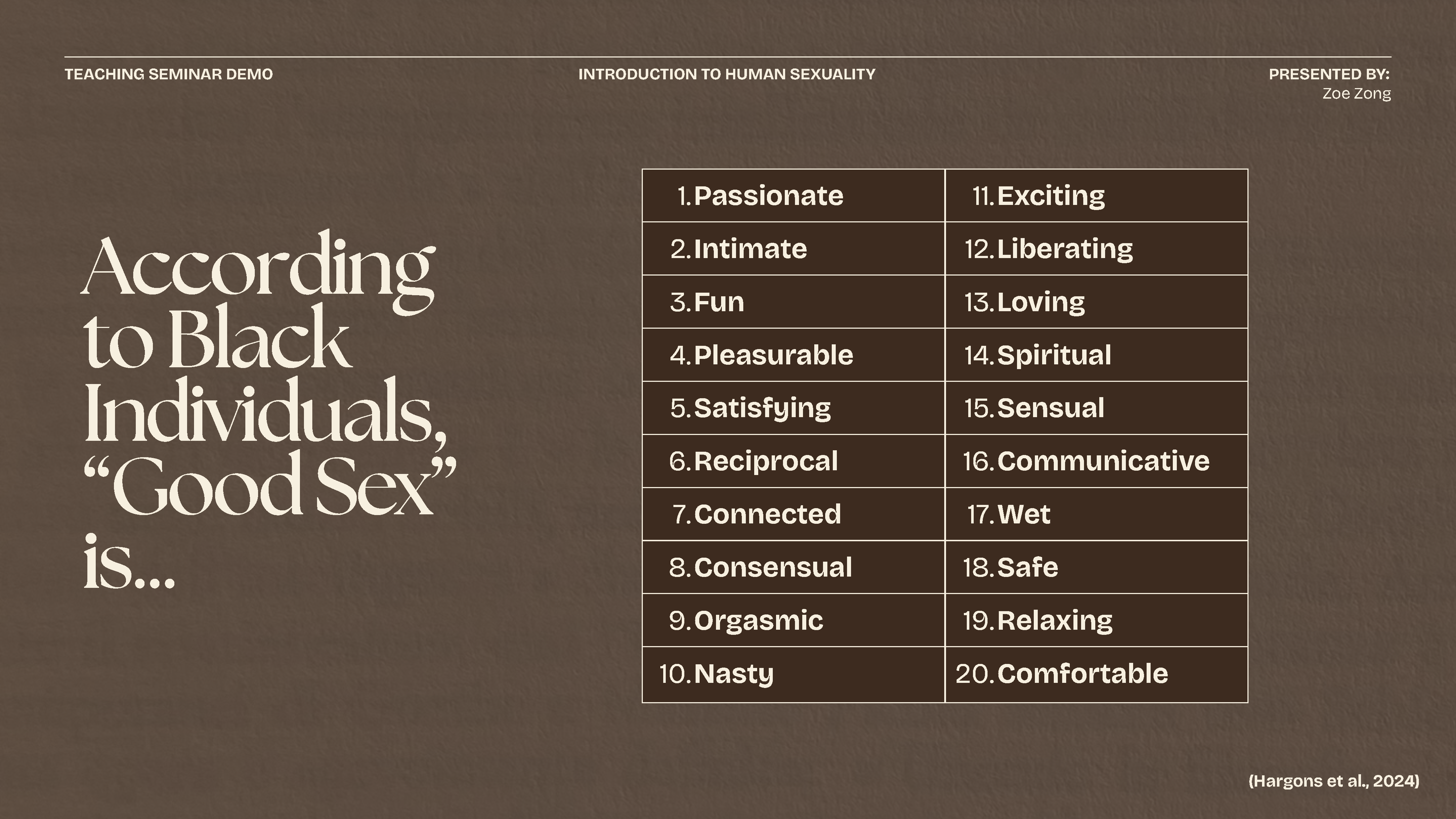
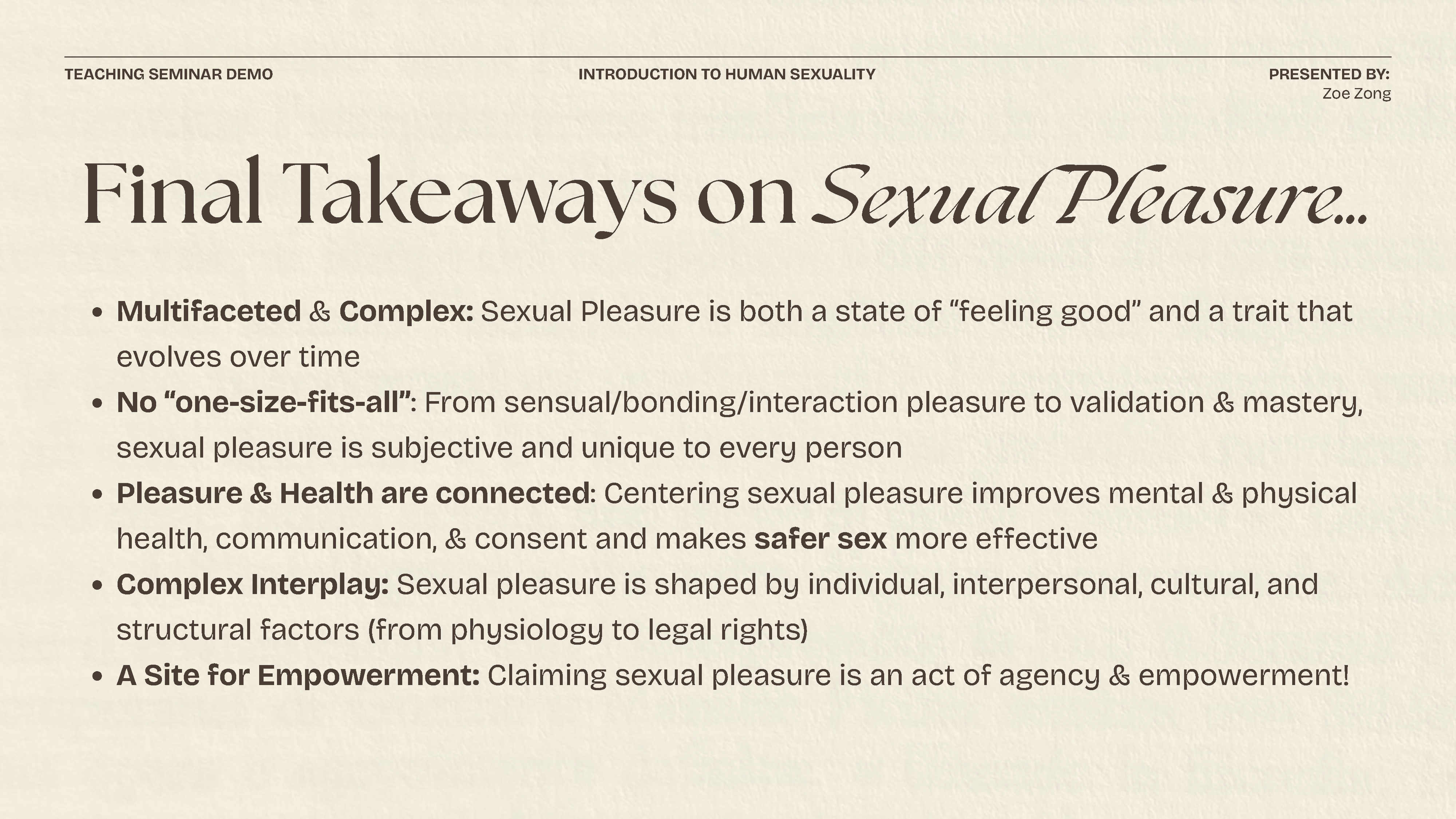
Here is a teaching demo I gave on Sexual Pleasure. Check out the slides below!


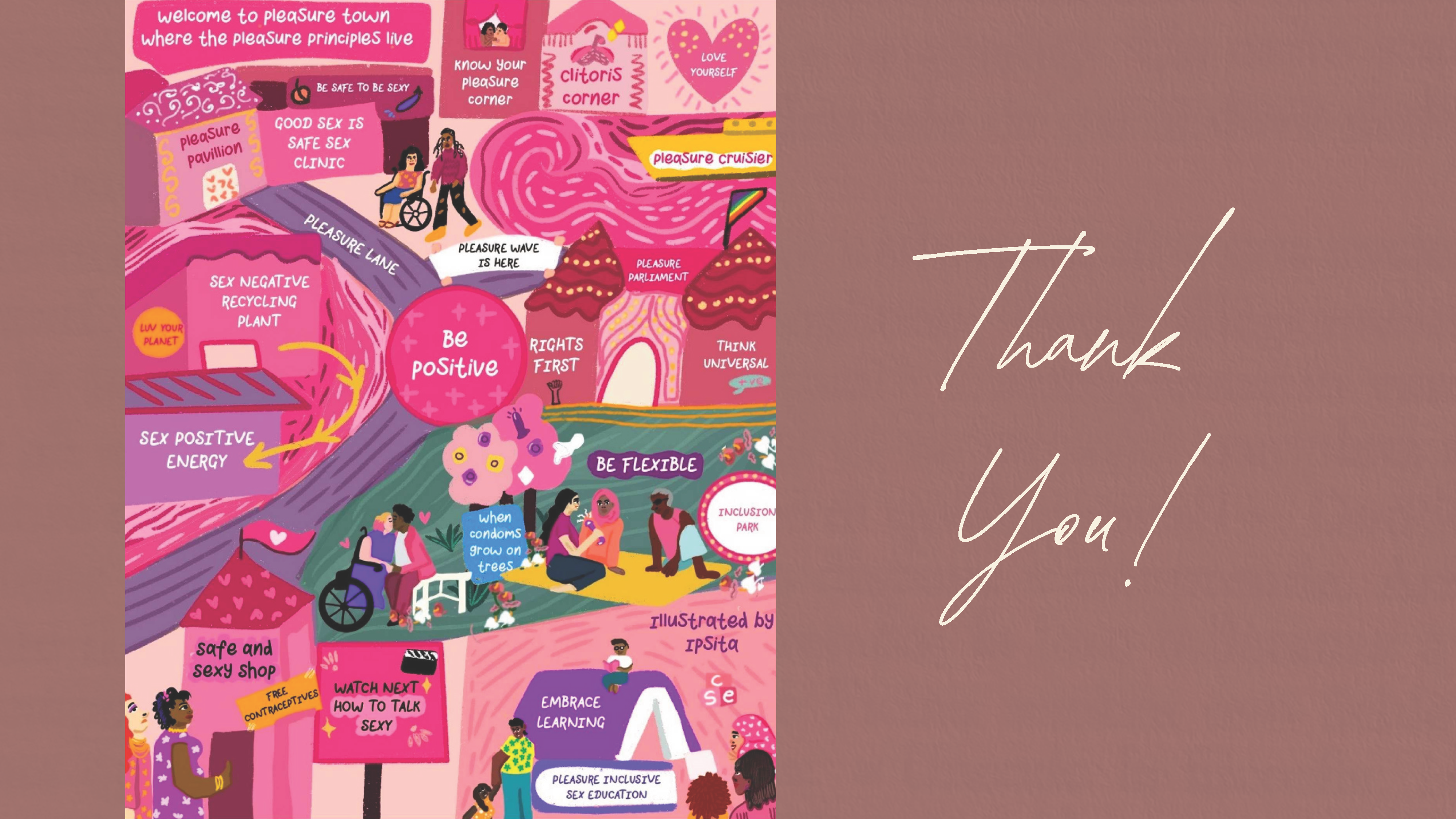
The whimsical artwork on the cover & end slides are illustrated by the talented Ipsita Divedi from The Pleasure Project.